
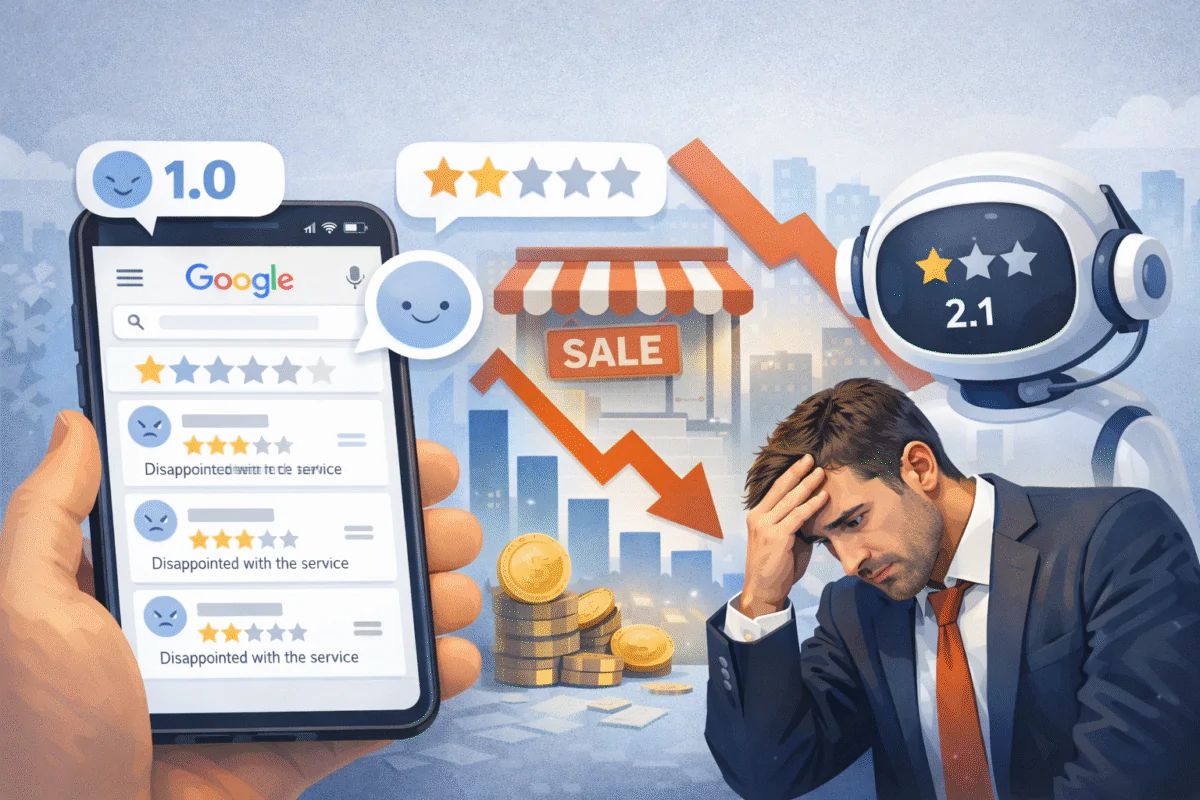
When sales decline, businesses often look for complex explanations: “Ads aren’t performing,” “SEO is lagging,” or “It’s a seasonal downturn.” But the truth is simpler. Many leads are lost before a potential customer ever reaches your website. Why? Because of negative reviews in Google. And now, artificial intelligence services like ChatGPT amplify this effect even further. Let’s break down how this actually works.
Google Is the First Point of Trust — Not Your Website
Today, customers don’t rush to a website. First, they Google the company or product. They read reviews, check ratings, and assess the brand in search results. Only then do they decide whether to continue or close the tab.
Imagine this: you’ve invested in advertising, your website looks perfect, but the customer sees 1–2 unanswered negative reviews in Google. A rating of 3.8 out of 5. Or forum mentions about “poor service.” The result? They choose a competitor. Even a flawless website won’t save the situation — trust is lost before the click.
According to research (for example, BrightLocal), 87% of consumers read reviews before making a purchase. And negative feedback carries more weight than positive.
How Negative Reviews Reduce Sales: 4 Key Ways
Negative feedback works quietly but effectively. Here’s how.
- Loss of trust before the click. A customer sees you in search results as one of several options. Negative reviews turn you into a “risk.” They simply don’t click — and you won’t see this in analytics.
- Lower conversion from ads and SEO. Even with strong advertising or SEO traffic, conversion rates can drop by 1.5–3 times. A typical path looks like this: click → return to Google → read reviews → choose a competitor. Example: a café with a great website but a review saying “dirty and rude service” can lose up to 20% of orders.
- Emotion-driven decisions. Logic takes a back seat. Phrases like “I don’t recommend it” or “I regret contacting them” outweigh ten positive reviews. Emotions beat facts.
- The “silent rejection” effect. The worst scenario: the customer doesn’t complain or contact you. They just leave. You see fewer leads, but the real reason is hidden in Google.
Can One Negative Review Ruin Everything?
Yes — especially in sensitive niches. If you work in services (healthcare, legal, IT, finance), with high-ticket offers or a lesser-known brand, one fresh negative review in the top three search results can block sales. For local businesses (salons, restaurants), this is standard practice: customers choose based on ratings.
Old reviews don’t disappear on their own. Google’s algorithms keep them for years, influencing rankings. Ignoring them only makes things worse.
How AI Services Amplify the Impact of Negativity
Now add artificial intelligence. People ask ChatGPT: “Can I trust [company name]?” or “What reviews does [brand] have?”
AI doesn’t invent information — it pulls data from the internet: Google, forums, articles. If negative content dominates, the answer will sound like: “There are complaints about the service; the rating is average.” The customer forms an opinion instantly — without visiting your website.
Example: a query like “car repair in [city].” Competitor company — X, your company — Y. AI responds: “Company X has mostly positive reviews, while Y has negative feedback about delays.”
Result: lost sales for Y.
Since 2023, the use of AI to check brand reputation has increased by 40% (according to Google Trends).
Why Reputation Must Be Managed in Advance
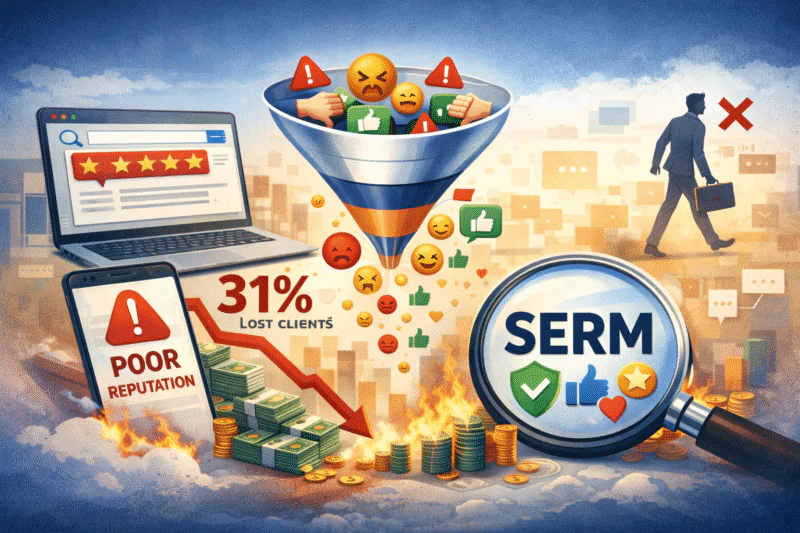
Reputation is the information environment shaped by Google and AI. Without control, customers see chaos: negativity, disputes, contradictions. Don’t wait for a crisis — start now. Respond to reviews, create positive content, and monitor mentions.
Today’s customer journey looks like this: Google → reviews → AI query → decision.
Negativity at any stage means the customer won’t reach you or your website — and you won’t even see this in your analytics.
Reputation Is a Basic Requirement for Sales
Negative reviews are not a minor issue. They directly affect conversion, emotions, and trust. Manage your reputation so customers actually reach you.
Where to Start a Reputation Check
Look at your brand through the customer’s eyes: Google it, analyze the search results, check AI responses. Identify the risks.
Free Reputation Check by Krakatets PRO
We provide analysis without sales pressure. It includes:
- analysis of Google search results for your brand;
- assessment of how negative content affects customers;
- identification of reputation risks;
- concise recommendations.
Free SERM brand audit.
Submit a request for a free check and see your brand the way customers see it.





 krakatets.pro.